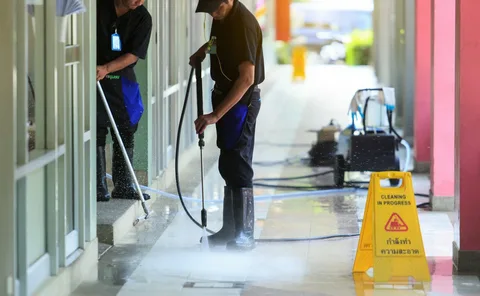
A storefront is often the first part of a business that customers see. Before they read your sign, speak with an employee, or walk through the door, they notice the condition of the building, entrance, sidewalk, windows, and surrounding surfaces. Dirt, stains, gum, graffiti, grease, mold, and weather buildup can make even a successful business look neglected. This is why regular storefront pressure washing is more than an appearance upgrade. It is an important part of exterior maintenance, customer experience, and property care.
When commercial properties are not cleaned regularly, contaminants gradually become harder to remove. Dirt can settle into concrete pores, gum can become firmly attached to sidewalks, and organic growth can make walking surfaces slippery. For businesses with high customer traffic, these problems can become noticeable quickly. Regular commercial pressure washing helps address these issues before they become larger maintenance concerns.
Why Does Storefront Cleanliness Matter?
Customers naturally form opinions based on what they see. A clean entrance can make a business appear organized, cared for, and welcoming. On the other hand, a stained sidewalk, dirty walls, or gum-covered entrance can create the opposite impression.
This does not mean that customers will automatically avoid a business because of a dirty exterior. However, poor exterior maintenance can influence how people perceive the overall condition of a property. A clean storefront creates a more inviting environment and helps businesses maintain a professional appearance.
For this reason, pressure washing storefronts should be considered part of routine property maintenance rather than something that only happens when the building becomes extremely dirty.
What Happens When You Stop Pressure Washing Your Storefront?
The effects of neglect usually develop gradually. At first, the exterior may simply look dull. Over time, however, multiple types of buildup can appear across the property.
Dust and road grime can collect on walls and entrances. Rain can leave streaks and stains. Organic matter can contribute to algae, mold, or mildew growth in damp areas. Heavy foot traffic can leave sidewalks looking worn and dirty. Food businesses may also deal with grease, spills, and chewing gum around entrances.
If these contaminants remain on the surface for long periods, cleaning may become more difficult. Professional pressure washing services can help remove accumulated dirt and restore many exterior surfaces, but regular maintenance can make the cleaning process easier and more manageable.
Dirty Sidewalks Can Affect Your Customer’s Experience
The area leading to your entrance is just as important as the storefront itself. Customers have to walk across sidewalks, concrete paths, parking areas, and entrances before they reach your business.
Dirt, algae, mud, grease, and other buildup can make these surfaces look unattractive. In some conditions, organic growth and grime may also contribute to slippery surfaces.
Concrete pressure washing is useful for cleaning sidewalks, driveways, patios, walkways, and other hard surfaces. Morris Pressure Washing explains that its concrete-cleaning approach addresses contaminants such as oil stains, moss, and algae while considering the characteristics of the surface being cleaned.
Keeping these areas clean can improve the appearance of the property while helping create a cleaner and more comfortable path for customers.
Chewing Gum Can Quickly Make a Storefront Look Neglected
One of the most noticeable problems around busy commercial properties is chewing gum. Small pieces may seem insignificant, but dozens of dark gum spots across a sidewalk can make the entrance look poorly maintained.
Gum can become particularly difficult to remove after being compressed by foot traffic and exposed to changing temperatures. During warmer weather, it may become softer and stickier.
Professional-grade gum removal provides a targeted solution for sidewalks and other pedestrian areas. Morris Pressure Washing specifically offers gum removal for commercial properties and explains that gum buildup can become an eyesore around stores, restaurants, theaters, and other high-traffic locations.
Removing these spots can make a surprisingly large difference in the overall appearance of an entrance.
Graffiti Can Damage a Business’s Appearance
Graffiti is another problem that businesses may need to address quickly. Whether it appears on a wall, concrete surface, fence, or other exterior area, visible graffiti can change the appearance of a property almost immediately.
Waiting too long to remove graffiti can make the property continue to look neglected. It may also become more difficult to clean depending on the surface and type of paint or marking involved.
Graffiti removal should therefore be handled carefully. The cleaning method needs to match the surface so that the unwanted marking is removed without unnecessarily damaging the underlying material. Morris Pressure Washing provides graffiti removal as part of its exterior cleaning services in the Oklahoma City area and surrounding communities.
Dirt and Stains Can Make Concrete Look Older
Concrete is durable, but that does not mean it stays clean without maintenance. Storefront sidewalks, entrances, driveways, parking areas, and loading zones can collect dirt, oil, tire marks, algae, and other stains.
Over time, these marks can make relatively new concrete appear old and neglected. Concrete pressure washing can remove surface contaminants and improve the appearance of these areas.
For businesses, this can be especially important around entrances and high-traffic zones where customers are most likely to notice stains.
How Often Should You Pressure Wash a Storefront?
There is no single schedule that works for every business. The right frequency depends on several factors, including foot traffic, weather, surrounding environment, type of business, surface material, and the amount of dirt or grease produced around the property.
A restaurant may need more frequent exterior cleaning because food, grease, and spills can affect surrounding areas. A retail store located beside a busy road may experience more road dust and grime. A property surrounded by trees may experience more organic debris.
Instead of waiting until the storefront looks extremely dirty, businesses can inspect their exterior regularly. If sidewalks are becoming discolored, gum spots are increasing, walls look dull, or algae and mildew are appearing, it may be time to schedule professional cleaning.
What Is the Difference Between Pressure Washing and Power Washing?
The terms pressure washing and power washing are often used interchangeably, although equipment and cleaning methods can vary. Power washing commonly refers to cleaning with pressurized water, sometimes using heated water.
The most important consideration is not simply how much pressure is used. The cleaning method should be appropriate for the surface.
Concrete can generally tolerate different cleaning approaches than painted surfaces, wood, exterior tile, or delicate materials. Excessive pressure can potentially damage some surfaces, which is why professional surface assessment matters.
A reputable pressure washing provider should consider the material, type of contamination, condition of the surface, and appropriate cleaning technique before beginning the job.
Why Professional Storefront Cleaning Can Be Better Than DIY
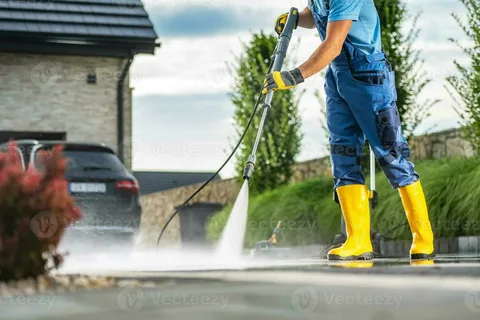
A pressure washer can look simple to operate, but improper use can create problems. Holding a nozzle too close to a surface, using excessive pressure, or choosing an unsuitable cleaning solution can damage paint, wood, concrete, or other materials.
Professional storefront cleaning involves more than spraying water. The technician needs to identify what is causing the discoloration and determine an appropriate cleaning method.
Morris Pressure Washing states that its equipment and cleaning methods are selected according to the surface and type of contamination. Its concrete-cleaning process, for example, uses a staged approach involving cleaning solution, agitation, and pressure cleaning rather than relying only on maximum water pressure.
Storefront Maintenance Is More Than Building Washing
A commercial property’s exterior often contains several different surfaces. Cleaning only the front wall may leave other areas looking dirty.
Depending on the property, maintenance may include Power Washing Fences, sidewalks, concrete, outdoor areas, loading zones, decks, and other exterior surfaces. Outdoor tile floor cleaning can also be useful for businesses with tiled patios, walkways, restaurant areas, or outdoor customer spaces.
Wood surfaces require a different approach as well. Pressure Washing and Sealing Wood Decks can help remove accumulated grime before appropriate protective maintenance is applied.
The goal is not simply to make one part of the property clean. A coordinated exterior-maintenance plan can create a more consistent appearance throughout the property.
Commercial Properties May Need More Than Storefront Cleaning
Businesses with vehicles, trailers, machinery, or industrial equipment may have additional cleaning requirements.
For example, Power Washing Trucks and Trailers can help remove road grime, dirt, grease, and other buildup from commercial vehicles. Heavy Equipment Washing may be useful for construction and industrial equipment that accumulates mud, oil, and job-site debris.
Morris Pressure Washing also lists Rig Washing and Oilfield Cleanup among its specialized cleaning services, showing that pressure washing can extend beyond traditional storefront and residential applications.
For commercial operators, maintaining equipment and property exteriors can contribute to a cleaner and more professional working environment.
Other Exterior Problems Businesses Should Not Ignore
Storefronts are not the only areas that can accumulate contaminants. Fences can become dirty from weather and surrounding vegetation, while outdoor surfaces can collect algae and grime.
Power Washing Fences can restore the appearance of many exterior fence surfaces when the correct cleaning technique is used.
Businesses should also pay attention to areas that are easy to overlook. Dryer vents, for example, are not normally considered part of storefront cleaning, but commercial and residential properties may require specialized maintenance. Morris Pressure Washing also lists Expert Dryer Vent Cleaning among its services.
The important lesson is that exterior property maintenance should be based on the actual needs of the property rather than a one-size-fits-all cleaning schedule.
What Are the Benefits of Regular Commercial Pressure Washing?
Regular commercial pressure washing can provide several practical benefits. First, it helps control visible dirt and stains before they become heavily embedded. Second, it helps businesses maintain a more consistent exterior appearance. Third, cleaning sidewalks and high-traffic areas can help address grime and organic buildup that may create unpleasant walking conditions.
Regular cleaning can also make property inspections easier. When surfaces are clean, owners and managers can more easily notice cracks, peeling paint, damaged concrete, deteriorating wood, or other maintenance issues.
Most importantly, regular cleaning turns exterior maintenance into a planned task instead of an emergency response to a severely neglected property.
How Morris Pressure Washing Can Help
Morris Pressure Washing provides pressure washing solutions for residential and commercial properties in the Oklahoma City area, including Oklahoma City, Norman, and Edmond. Its website also identifies service coverage in communities such as Shawnee, Yukon, Blanchard, Piedmont, and Mustang.
Its services include Pressure Washing Services, Residential Pressure Washing, Commercial Pressure Washing, Pressure Washing Storefronts, Concrete Pressure Washing, Professional-Grade Gum Removal, Graffiti Removal, Power Washing Fences, Outdoor Tile Floor Cleaning, Heavy Equipment Washing, Power Washing Trucks and Trailers, Rig Washing and Oilfield Cleanup, and other exterior cleaning solutions.
For a business owner, the best approach is to evaluate the property first and determine which surfaces actually need attention. Not every surface requires the same pressure, cleaning solution, or frequency.
Final Thoughts
Ignoring storefront cleaning does not usually create one major problem overnight. Instead, dirt, gum, stains, algae, graffiti, and general weather exposure gradually make a property look older and less maintained.
Regular storefront pressure washing helps businesses stay ahead of that buildup. Clean sidewalks, entrances, walls, concrete, and surrounding exterior areas can create a more welcoming environment for customers while helping property owners identify maintenance problems earlier.
Whether a business needs routine commercial pressure washing, concrete cleaning, gum removal, graffiti removal, fence cleaning, or specialized equipment washing, the cleaning method should always be matched to the surface and type of contamination.
For businesses in the Oklahoma City area, Morris Pressure Washing offers a broad range of residential and commercial cleaning services designed to address different exterior maintenance needs. The goal is not simply to make a property look clean for one day, but to make exterior cleaning part of a sensible, ongoing maintenance strategy.
Frequently Asked Questions
1. How often should a storefront be pressure washed?
The ideal schedule depends on traffic, weather, surrounding conditions, and the type of business. High-traffic businesses may need cleaning more frequently, while other storefronts may only require seasonal service. A good rule is to schedule cleaning before dirt, gum, algae, or stains become heavily established.
2. Can pressure washing damage a storefront?
Yes, improper pressure washing can damage certain surfaces. Too much pressure can affect paint, wood, mortar, exterior finishes, or other delicate materials. Professional cleaning should use the appropriate pressure, nozzle, distance, and cleaning method for each surface.
3. What is the best way to remove gum from a commercial sidewalk?
Old chewing gum can be difficult to remove with ordinary sweeping or basic cleaning. Professional-grade gum removal equipment and techniques can help loosen and remove gum without unnecessarily damaging the surrounding surface. Treating gum early can also prevent a large buildup of visible spots.
4. Should I pressure wash my storefront after graffiti appears?
Graffiti should generally be addressed as soon as reasonably possible. The correct removal method depends on the surface and type of marking. Professional graffiti removal can help reduce the chance of damaging the underlying wall, concrete, brick, or other material.
5. What other commercial surfaces can be pressure washed?
Commercial cleaning can include storefronts, sidewalks, concrete, fences, outdoor tile, parking areas, decks, loading areas, trucks, trailers, and heavy equipment. The appropriate method depends on the material and contamination. Morris Pressure Washing offers both general and specialized cleaning services for different residential and commercial applications.