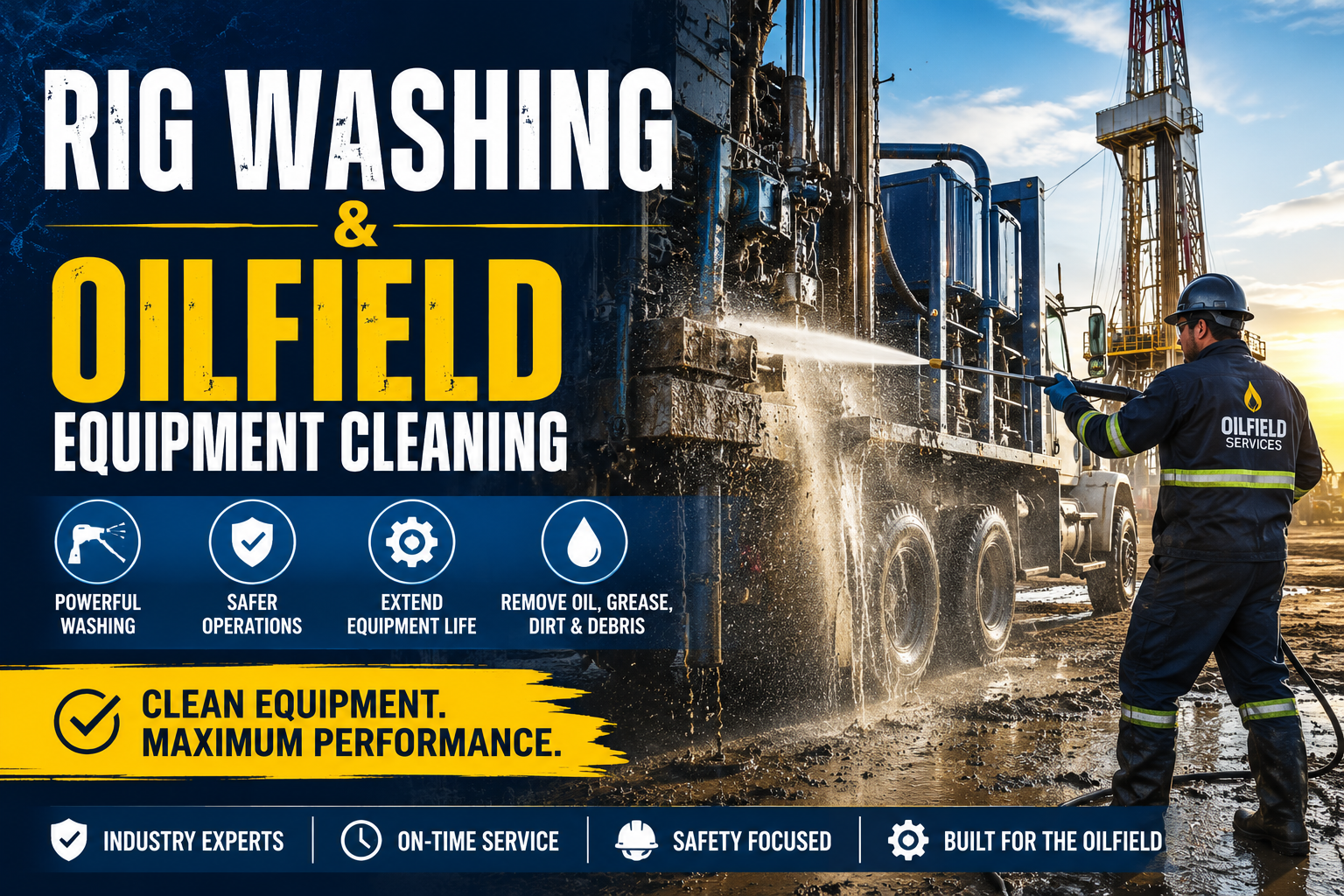
Oklahoma’s oilfields run on heavy machinery, and that machinery takes a beating every single day. Grease, crude oil residue, drilling mud, and chemical buildup coat rigs, tanks, and trailers faster than most crews realize. A garden hose might knock off surface dust, but it does almost nothing against the layers of grime that build up on active oilfield equipment.
That’s where professional rig washing Ok crews come in. Companies like Morris Pressure Washing specialize in rig washing and oilfield cleanup, using industrial-grade equipment and techniques built specifically for the demands of the energy sector not the light-duty cleaning a homeowner’s hose was ever designed to handle.
Why a Garden Hose Isn’t Enough for Oilfield Equipment
A standard garden hose produces somewhere around 40-60 PSI of water pressure. Crude oil, hydraulic fluid, and hardened drilling mud simply don’t respond to that kind of gentle rinse. The residue stays baked onto metal surfaces, seals, and joints, where it continues to cause damage long after the “cleaning” is done.
Low-pressure washing also leaves behind the fine grit and chemical film that accelerates corrosion. Over time, this buildup eats into metal components, weakens hydraulic seals, and shortens the working life of equipment that often costs hundreds of thousands of dollars to replace. Oilfield equipment cleaning done right requires far more force, the correct water temperature, and cleaning agents formulated for petroleum-based residue.
What Makes Rig Washing “Professional Grade”
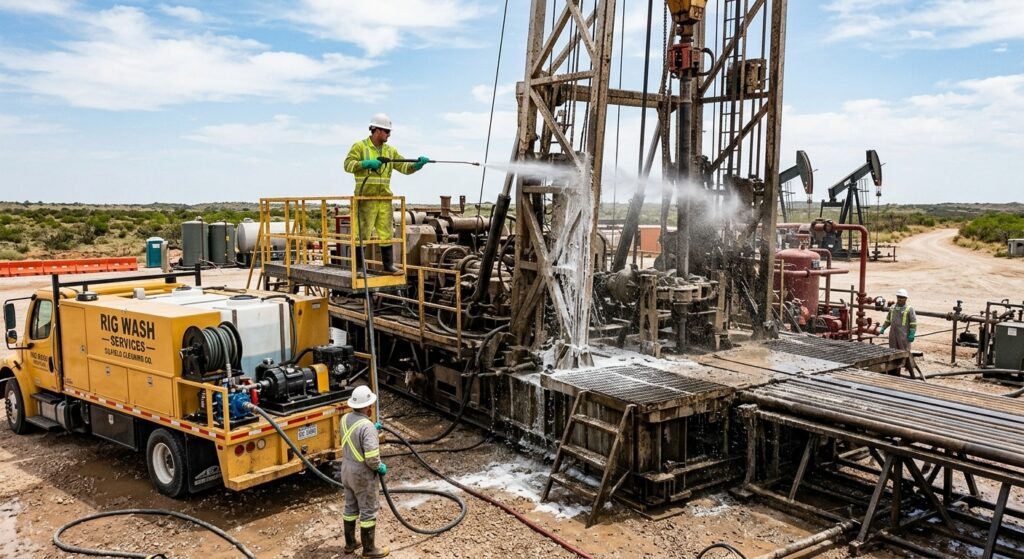
Professional rig washing isn’t just about blasting water at high pressure. It’s a controlled process that balances power with precision so equipment gets clean without getting damaged. Technicians use commercial-grade pressure washing systems capable of producing thousands of PSI, paired with degreasers and solvents that are safe for metal, rubber seals, and hydraulic lines.
Temperature control matters too. Hot water pressure washing breaks down oil and grease far more effectively than cold water alone, which is why professional-grade heavy equipment washing almost always uses heated systems on stubborn petroleum buildup. Combined with proper technique, this approach removes residue completely instead of just pushing it around the surface.
Environmental compliance is another piece most people overlook. Oilfield sites are subject to strict wastewater and runoff regulations, and professional crews know how to manage water reclamation and containment so cleanup doesn’t create an environmental violation. This is a level of expertise a garden hose or an untrained crew simply can’t provide.
Why Regular Rig and Equipment Washing Matters
Skipping regular cleaning doesn’t just make equipment look bad. It actively shortens its lifespan and increases operating costs. Corrosion caused by trapped oil, salt, and drilling chemicals eats away at metal components, leading to more frequent repairs and earlier equipment replacement.
There’s also a safety dimension that’s easy to underestimate. Oil and grease buildup on walkways, platforms, and equipment surfaces creates serious slip-and-fall hazards for crews working on-site. Combined with the fire risk that comes from accumulated petroleum residue near hot machinery, dirty equipment isn’t just an eyesore it’s a liability.
Routine rig washing and oilfield cleanup also helps operators stay ahead of safety inspections and environmental audits. Clean equipment is easier to inspect for cracks, leaks, and wear, which means problems get caught before they turn into costly downtime. For an industry where every hour of operation counts, that kind of preventive maintenance pays for itself.
Beyond the Rig: Full-Fleet and Facility Cleaning
Oilfield operators rarely need just one type of cleaning service, and that’s where a full-service provider makes a real difference. Alongside rig washing, most sites also rely on heavy equipment washing for excavators, loaders, and other machinery that tracks mud and oil across a work site daily.
Fleet maintenance matters just as much. Power washing trucks and trailers keeps company vehicles looking professional while removing the road grime, oil, and debris that accelerates rust on frames and undercarriages. A clean fleet also reflects directly on a company’s reputation when trucks are seen driving through town or parked at a job site.
Facilities connected to oilfield operations benefit from the same expertise. Concrete pressure washing removes oil stains and chemical spills from yards, loading areas, and parking pads, while pressure washing storefronts keeps front offices and customer-facing buildings looking sharp. Even smaller issues like graffiti removal or professional-grade gum removal around entryways contribute to a cleaner, more professional overall presence.
A Full-Service Approach to Exterior and Industrial Cleaning
What sets a company like Morris Pressure Washing apart is the ability to handle both industrial-scale jobs and everyday exterior cleaning with the same level of expertise. Their pressure washing services cover everything from oilfield sites to neighborhood driveways, all backed by professional-grade equipment and trained technicians.
On the residential side, residential pressure washing restores curb appeal by removing dirt, algae, and stains from siding, driveways, and walkways. For homeowners looking to protect outdoor wood surfaces, pressure washing and sealing wood decks cleans and seals against moisture damage, extending the life of the deck for years to come. Homes also benefit from expert dryer vent cleaning, which reduces fire hazards and improves dryer efficiency a service most exterior cleaning companies don’t even offer.
Businesses have their own set of needs, and commercial pressure washing keeps storefronts, sidewalks, and parking areas looking presentable for customers. General power washing and power washing fences handle everyday buildup on a variety of surfaces, while outdoor tile floor cleaning restores patios, pool decks, and walkways without damaging delicate tile finishes.
This range of services means one company can handle an oilfield rig one day and a residential driveway the next all with the same commitment to professional equipment cleaning services and quality results. For property owners and operators alike, that kind of versatility simplifies maintenance and builds long-term trust in a single, reliable provider.
The Bottom Line
Oilfield equipment works hard, and it deserves cleaning that matches that intensity. A garden hose might handle light dust, but it can’t touch the oil, grease, and chemical residue that builds up on rigs and heavy machinery day after day. Professional rig washing protects equipment value, improves on-site safety, and keeps operations running smoothly something no DIY approach can match.
Whether it’s a single rig, a full fleet of trucks and trailers, or an entire facility that needs attention, working with an experienced provider ensures the job is done right the first time. For Oklahoma operators looking for dependable, professional-grade cleaning, investing in proper rig washing isn’t optional it’s essential equipment maintenance.
Frequently Asked Questions
1. How often should oilfield rigs be professionally washed?
Most oilfield operators schedule professional rig washing every one to three months, though sites with heavy production or frequent drilling mud exposure may need more frequent cleaning. Regular washing prevents oil and chemical residue from hardening, which makes each cleaning easier and less costly over time.
2. Can pressure washing damage sensitive rig components or electronics?
When done by trained professionals, no. Technicians adjust pressure levels, water temperature, and cleaning agents based on the specific component being cleaned, avoiding sensitive electronics, seals, and hydraulic lines. This is exactly why DIY cleaning with a garden hose or improperly calibrated pressure washer carries a higher risk of damage.
3. What’s the difference between rig washing and standard heavy equipment washing?
Rig washing typically deals with heavier crude oil residue, drilling mud, and chemical buildup specific to oilfield operations, often requiring hot water systems and specialized degreasers. Heavy equipment washing covers a broader range of machinery, such as excavators and loaders, but uses similar high-pressure, professional-grade techniques.
4. Is professional rig washing environmentally compliant?
Reputable providers follow wastewater containment and runoff regulations required at oilfield sites, using water reclamation methods to prevent oil and chemical runoff from contaminating soil or water sources. This compliance protects operators from potential environmental violations and fines.
5. Does clean equipment actually extend its operational lifespan?
Yes. Removing oil, grease, and corrosive residue prevents the gradual metal degradation that leads to cracks, leaks, and equipment failure. Regular professional washing is one of the most cost-effective forms of preventive maintenance available for oilfield equipment.